It was an enormous mound of dog poop. A world class mound.
I can make this judgment since I am a resident of St Petersburg, a dog-intensive city. Maybe twenty percent of the people living in my downtown building have dogs. They are pretty good at cleaning up after their pets, departing the building with green plastic bags protruding from pockets or secured to leashes. Their destination is Pioneer Park, just across the street from us, a green space with a monument celebrating St Petersburg’s early solons. I would not go barefoot there.
The poop in question was associated with a gargantuan animal, a 183-pound bull mastiff, Kenai, named after an Alaskan Peninsula. He was a brindle color, with a mouth the size of a catcher’s mitt, jowls dripping with stalactites of drool. His eyes were red-rimmed and rheumy, with bags below that drooped like those of a bar fly coming off a three-day binge. My Life’s Editor nearly toppled over when he leaned against her for a rub. Thumping him was like beating on the side of a well-upholstered couch.
He was a love bug.
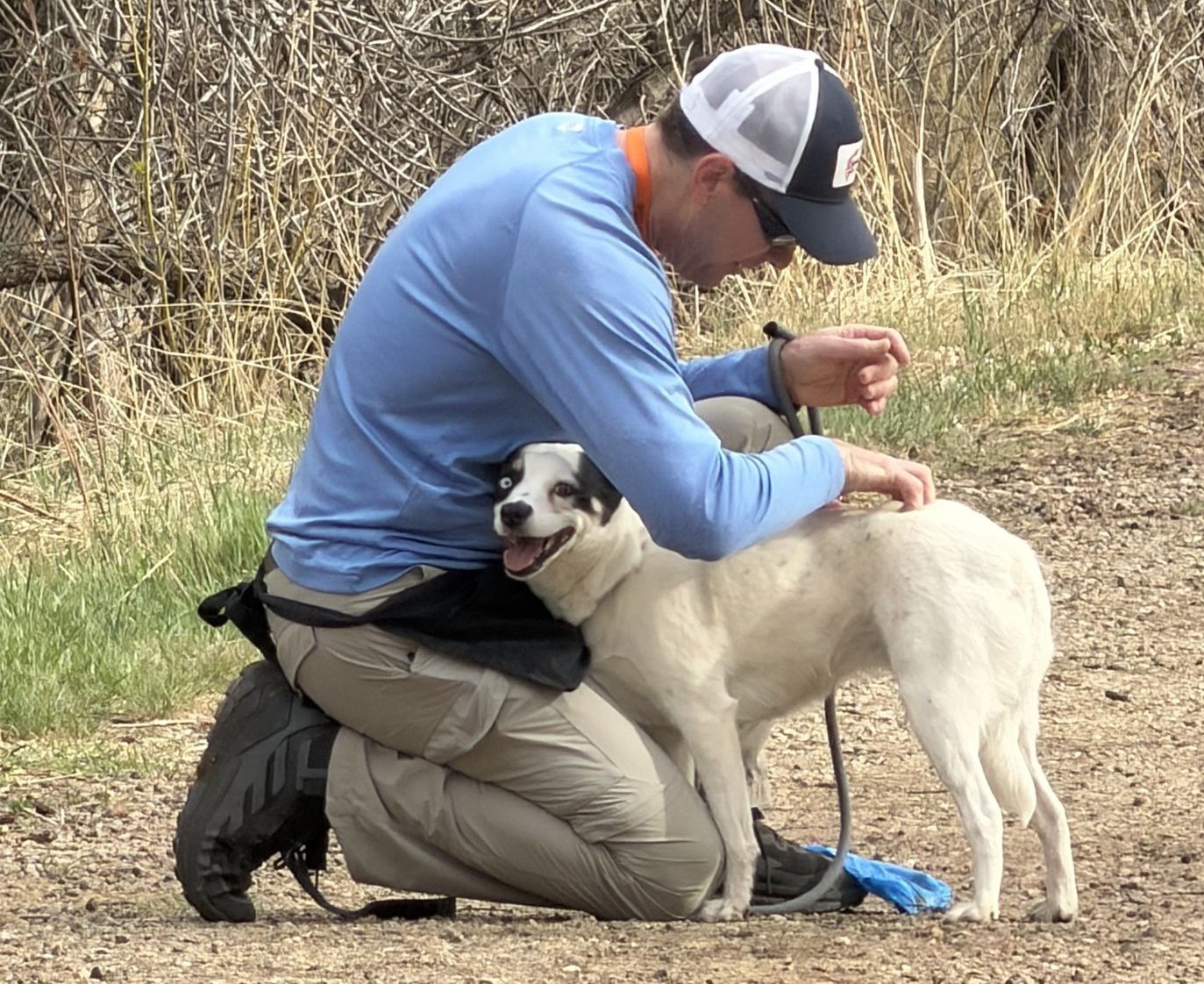
Bull mastiffs were raised by English gamekeepers to discourage poachers from snagging the Lord’s fish, fowl or deer. Most likely the poachers were my ancestors, wily Scots of the MacGregor clan, people who were not easily discouraged. A recent product of that ancestral line, attached tenuously to Kenai’s leash, was my son, a former IT magnate, now volunteer at the Humane Society of Boulder Valley, CO. He started at the Humane Society as the Society’s version of the Indian Dalit caste, the lowest of low, a cleaner of dog kennels. Showing an enterprising spirit and no fear of dog poo, he had advanced to the elevated status of dog walker. My Life’s Editor and I had been given clearance to follow him for a morning as he exercised his charges.
Kenai’s output was a two-bagger. I was assigned to deposit the goods in an approved bin. The Dalits would take it away later.
The front of the Humane Society has two entrances, one for adoptions and one for surrenders, as the Society terms it. One is happy and smiley, where families collect rabbits, kittens and dogs to take home, and the other is quiet and subdued, as pets arrive to become orphans. Kenai became an orphan because his owner had to move and could not accommodate the big guy’s need for space, not to mention the grocery bill.
Upon surrender, dogs keep their original family-given names; unchipped or strays are given a new name by the staff. During the morning, we walked five, one by one, around the back forty of the Society’s premises. Along with Kenai, we strolled with Ellie May, Stella, Benji and Peach. They were All-American canines, with a bit of pit bull here, a bit of Australian cattle dog there, and a sprinkling of spitz. Dogs are unconcerned with purity of breed, being open to procreate with anyone who comes around the corner, as opposed to humans, who can be picky.
It is helpful to make a comparison here about the living arrangements of the Humane Society’s dogs, as opposed to human children’s.
Dogs have their own kennel
Human children often have to share
Dogs have many chew toys available
Human children do not
Dogs have their kennel rug washed daily
Human children do not
Dogs have their play critters washed daily
Human children do not
Humane Society dogs also get hollow rubber cones, stuffed with peanut butter, to chew and nosh on. They are stowed in a refrigerator like popsicles.
For years I viewed pit bulls as a danger to civil society, associating them with angry white men who watch Ultimate Fighting on TV and crush Budweiser beer cans on their foreheads. My son encouraged me to peel the images apart. Nurture was the culprit, not nature, he said. The threat I felt from pit bulls at the Society was that they would slobber me to death. With a pink, mashed-up, hairless muzzle, one pit bull looked like a Winston Churchill doppelganger.
Animal behavior specialists work with dogs who might be aggressive or fearful from abuse, not ready for prime time. One passionate fellow had to be discouraged from making love to people’s legs. His ardor reminded me of my all-boy boarding school, where it was rumored the administration put saltpeter in our food before exchange dances with girls’ schools.
As we walked down the row of kennels to pick up a walk companion, doleful eyes, whines, leaps and wiggles screamed, “Pick me! Pick me!” They were raring to get out. For them a walk was like Christmas, the Fourth of July and the end of term exams in one package. Not to mention the opportunity to pee somewhere other than in your own bedroom.
The Society’s adoption fee starts at a paltry $50, but may go higher. They throw in a microchip, sterilization (non-negotiable), vaccines, and a free exam. A pedigreed French bulldog wearing a $10,000 price tag could not love you more than an off-the-shelf mixed breed available for possibly 1/200th the cost. There are 25 currently looking for a home at www.boulderhumane.org. Unfortunately, if you see one you like, the Society does not ship. I am partial to Bluebell.
Unlike having a child, where you are stuck with what the stork brings, you get to choose a dog as a family addition. Pure bred or mixed breed, a dog, unlike a child:
- doesn’t care if you deny it cell phone privileges
- loves you unconditionally, even in its teenage years
- doesn’t need to wear ripped $150 blue jeans
- doesn’t want to go to college, get a PhD in Mexican Folk Pottery
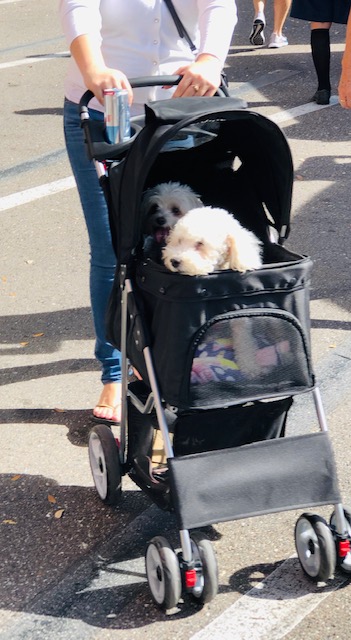
If you insist on having the child experience, try this:
PS Kenai was adopted.


Excellent offering today! And he got adopted! Made me smile. SteveSteven M. Seibert850.321.9051
LikeLike