My Life’s Editor and I settled our tushes into plush burgundy orchestra seats at the Asolo Theater. The mezzanine and the balcony rose above us in a vertical rush, separated by bands of bas relief fripperies – swags of vines threading around plaques of lyres and profiles of dead Italian Renaissance glitterati. Built for opera in 1798 in Asolo, Italy, the theater is so intimate you can smell spearmint on the breath of box seat occupants. In the 1930s, Fascists took it down. The impresario John Ringling purchased the bits and pieces in the late ’40s and shipped them to Sarasota and reassembled for the John and Mabel Ringling Museum.
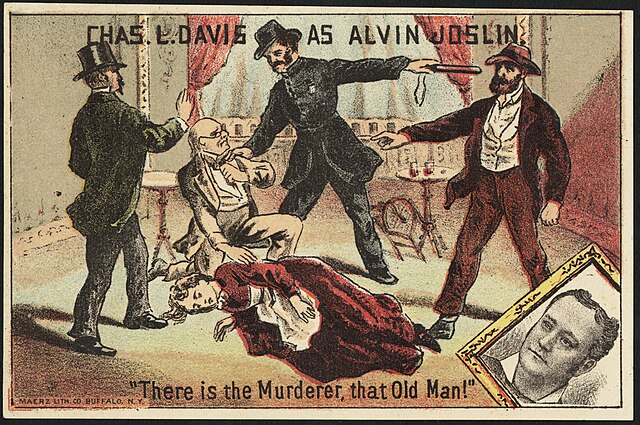
On the stage above us, William Jennings Bryant, for the prosecution, and Clarence Darrow, for the defense, sweated in the heat of a Tennessee summer, arguing over evolution and the Bible in the play Inherit the Wind. As I thumbed the Playbill, I considered the difference between theater actors and screen actors. Theater actors are high wire artists, plying their trade without a safety net. If a stage performer blows a line, she improvises on the spot and gets on with things. If a screen actor blows a line while filming, the director shouts “Cut!” and the scene is repeated until the actor gets it right.
Stage actors memorize prodigious scripts that can race, glide or clump along for nearly two hours. Scripts have “stage business” peppered throughout. Stand here, turn there, light up a smoke, squint sideways at Portia, etc. By contrast, a movie actor checks out the script for his next scene as he sits in a trailer in a canvas chair screen-printed with his name, and sips on a Prosecco.
There were 30 actors in the cast of Inherit the Wind when it was originally performed in New York in 1955. Our revival had a similar crowd of cast members. They streamed in and out on three elevations, some even disappearing below stage where the woeful schoolteacher defendant was incarcerated. There were no collisions. Teeny mic wires draped around actors’ ears. At times the cast looked like a gathering of people with bad hearing, like a recent condo party I attended.
Stage acting has been a sweat job ever since Aeschylus mounted his first play circa 500 BCE. Dressed in hot togas, actors had to deliver the goods to the entire amphitheater, striding about and declaiming before a rowdy Greek crowd – all men, audience and gyro peddlers included. A screen actor can flap an eyelash in a close-up to convey lust or sorrow. No close-ups at the Asolo; the leads have to sell to the balcony as well as to the orchestra.
In high school I received a passable review for my performance treading the boards as Colonel Wainwright Purdy III in the Teahouse of the August Moon. Teahouse was the first play I had ever seen, much less acted in. I received a passable review because I edited the school paper and wrote the review. It took gobs of baby powder on my hair and eyebrows, and eyeliner-drawn wrinkle lines, to turn me into a 50-year-old man. My officer’s cap was too big and kept slipping over my ears. The run lasted for the weekend and the glamour vanished on Monday. Sic transit gloria mundi.
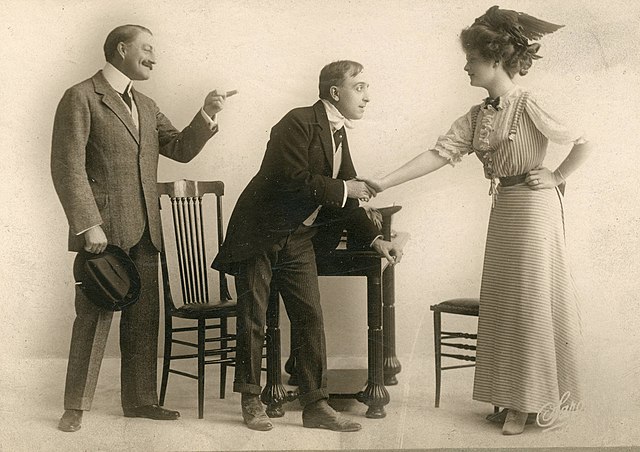
Having fellow actors on stage gave comfort in Teahouse. I was not alone. The next time I performed before an audience was at the American National Bank and Trust of Chicago. I presented the case to the bank trust department for adding a stock to the approved investment list. From the head of the conference table I looked out at a phalanx of dark-suited elder men, mostly frowning. I was terrified. What thoughts lay behind those stony eyes? They were likely reviewing missed shots in their last golf game. At the curtain, both my performance and the stock received a thumbs-down. The stock: McDonald’s. Really.
The bank treated me to a Dale Carnegie course.
For most of us, the idea of walking on stage in front of a theater full of people is like crawling out of a foxhole and charging into enemy fire. My daughter, the philosophy professor, had no such fear. A drama major in college, she yearned for the stage. She performed professionally as a kid actor – Annie and Brighton Beach Memoirs. She would count the house while singing “Tomorrow.” In college one of her biggest drama challenges was learning to smoke as the psychiatrist in Agnes of God. It’s what you do for art.
Stage actors are real people in real time, not two-dimensional images on a screen. They are spinners of tales. As they engage us, we lean forward in our seats. Our growing interest creates an emotional energy from which the actors, in turn, draw. So it was with Inherit the Wind. At the play’s end Clarence Darrow walked away from an empty courtroom, a Bible in one hand, the Origin of the Species in the other. We rose from our seats, clapped madly, breathing silent “Wow”s.
 Marshall Craig
Marshall – that is a wonderful piece of writing. You knew whereof you spoke. It showed.
Bill
LikeLike
Much appreciated, Bill.
LikeLike
Marshall: this is great. You really captured why Ann and I have become hooked
LikeLike
Marshall,
I enjoy all of your posts, this one likely the most. Confessional: I am a reformed actor. The pinnacle of my career was my award-winning turn as Dracula at FSU; also did community theatre, local television commercials, and one film, best described as “execrable.” My acting career ended, when at 40, I began law school. From then on and through 30 years of law practice, there was no time for rehearsal schedules. Now, I am fit only for film work—I would do well to remember 30 seconds of dialogue, and would need cue cards to get that far. Needless to say, the offers have not come pouring in.
Looking forward to seeing you and your life editor over the race weekend.
Wellington
LikeLike